Hydrogen Peroxide vs. Bleach: What Actually Kills Mold?
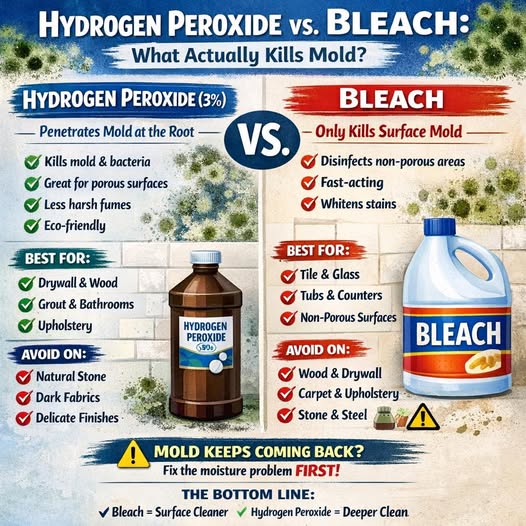
When it comes to mold, not all cleaners work the same — and knowing the difference matters.
⸻
 Hydrogen Peroxide (3%)
How it works:
Hydrogen peroxide penetrates porous surfaces and kills mold at the root. It also helps remove staining left behind.
Pros:
 Kills mold and bacteria
Works better on porous surfaces
Less harsh fumes
Breaks down into water + oxygen (more eco-friendly)
Best for:
• Drywall (small areas)
• Wood
• Grout
• Bathroom surfaces
• Upholstery (spot test first!)
Avoid using on:
 Natural stone (can etch marble, granite)
Dark fabrics (can cause lightening)
Delicate finishes without spot testing
⸻
 Bleach (Sodium Hypochlorite)
How it works:
Bleach kills surface mold and whitens stains — but it does not penetrate porous materials well. That means mold roots can survive underneath.
Pros:
Disinfects hard, non-porous surfaces
Fast-acting
Whitens stains
Best for:
• Tile
• Glass
• Tubs
• Sealed countertops
• Non-porous bathroom surfaces
Avoid using on:
Wood
Drywall
Carpet
Upholstery
Stainless steel (can corrode)
Natural stone
Mixing with vinegar or ammonia (dangerous fumes  )
)
⸻
 Important:
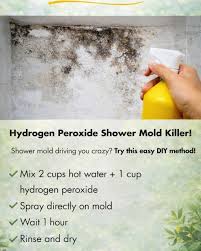
If mold keeps coming back, it’s usually a moisture issue — not a cleaning issue. Fix the leak, humidity, or ventilation problem first.
⸻
The Bottom Line:
• Bleach = surface-level disinfectant.
• Hydrogen peroxide = better penetration for small mold spots.