Introduction
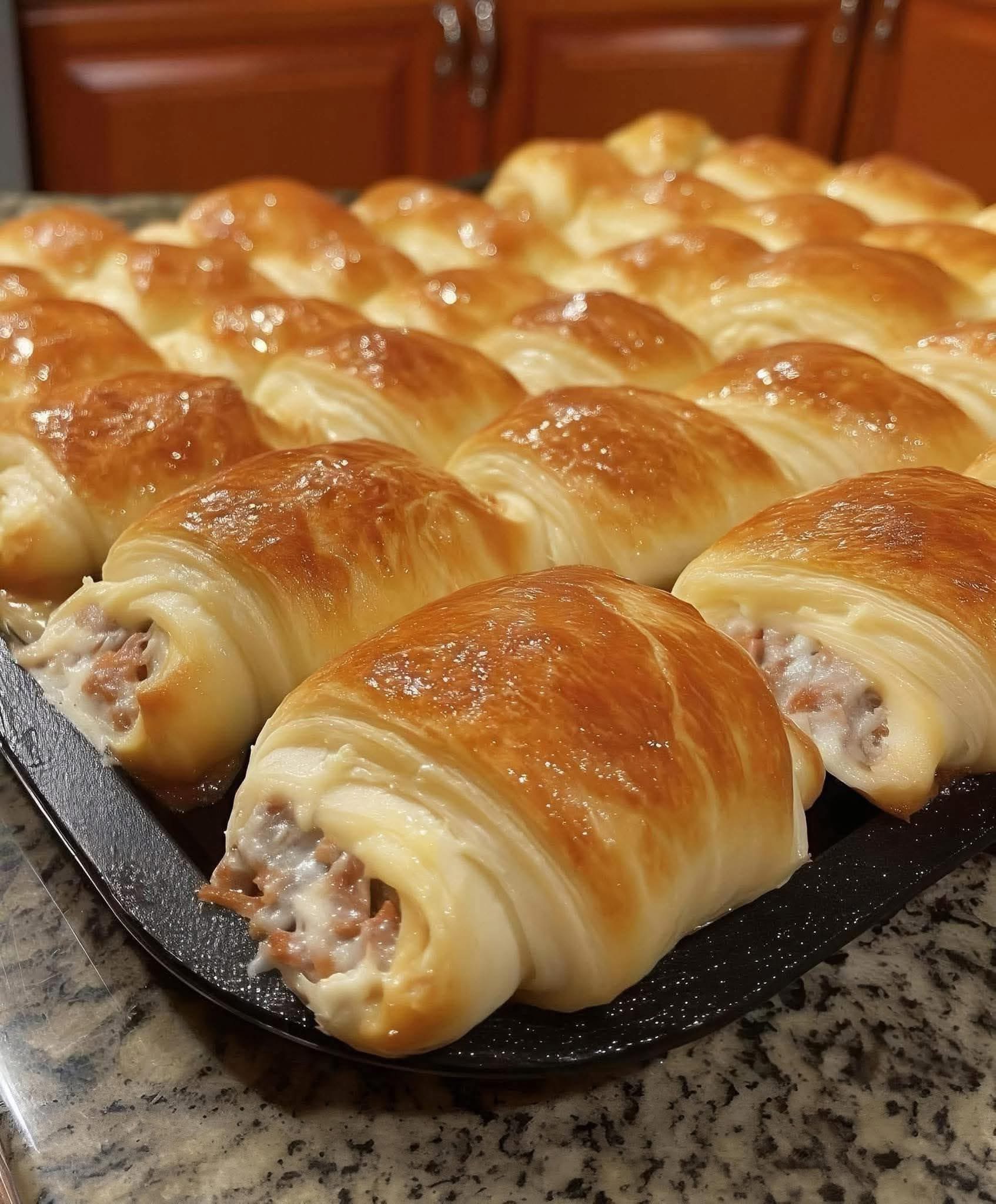
Forget everything you thought you knew about your breakfast or brunch spread, because today we’re diving into a pastry revelation that will have your taste buds singing! Imagine a golden-brown, flaky exterior, reminiscent of the finest croissants, cradling a rich, creamy, and utterly irresistible filling. These aren’t your average pastries; these are a symphony of textures and flavors, designed to elevate any meal from ordinary to extraordinary. With their alluring shine and perfectly puffed layers, these filled pastries are bound to become the star of your next gathering, whether it’s a casual Sunday brunch, an elegant afternoon tea, or even a sophisticated appetizer for an evening soiree.
What makes these pastries truly special is their incredible versatility and the delightful surprise within each bite. The dough itself is a masterpiece of lamination, creating those coveted, delicate layers that shatter beautifully with every forkful. But it’s the contrast with the luscious, savory cream cheese and ham filling that truly sets them apart. It’s a harmonious blend of salty, savory, and subtly tangy notes, encased in a buttery, slightly sweet shell. While they might bear a resemblance to beloved rugelach or even smaller croissants, these pastries carve out their own unique niche, offering a more substantial and satisfying experience that will leave everyone clamoring for the recipe.
Perfect for serving warm straight from the oven, or equally delightful at room temperature, these pastries are incredibly adaptable. They pair beautifully with a strong cup of coffee to kickstart your morning, a refreshing glass of iced tea for an afternoon treat, or even a crisp white wine as a sophisticated appetizer. Get ready to impress your family and friends with this show-stopping recipe that’s as enjoyable to make as it is to devour!
Nutritional Information
Per serving (approximate values):
- Calories: 380
- Protein: 12g
- Carbohydrates: 35g
- Fat: 22g
- Fiber: 2g
- Sodium: 450mg
Ingredients
For the Dough:
- 3 ½ cups (420g) all-purpose flour, plus more for dusting
- 1 tablespoon granulated sugar
- 1 teaspoon salt
- 1 packet (2 ¼ teaspoons) instant dry yeast
- 1 cup (240ml) warm milk (105-115°F / 40-46°C)
- ½ cup (113g) unsalted butter, melted and cooled slightly
- 1 large egg, lightly beaten, plus 1 for egg wash
For the Filling:
- 8 ounces (226g) cream cheese, softened
- ½ cup (113g) cooked ham, finely diced
- ¼ cup (25g) grated Parmesan cheese
- 2 tablespoons fresh chives, finely chopped
- ⅛ teaspoon black pepper
For the Egg Wash:
- 1 large egg
- 1 tablespoon milk or water
Instructions
- Prepare the Dough: In a large mixing bowl, combine the flour, granulated sugar, salt, and instant dry yeast. Whisk together to ensure even distribution.
- In a separate bowl, combine the warm milk, melted butter, and the lightly beaten egg. Pour the wet ingredients into the dry ingredients and mix with a wooden spoon or a stand mixer with a dough hook attachment until a shaggy dough forms.
- Turn the dough out onto a lightly floured surface and knead for 5-7 minutes, or until the dough is smooth and elastic. It should be slightly tacky but not sticky.
- Lightly grease a clean bowl with a little oil. Place the dough in the bowl, turning it once to coat. Cover the bowl with plastic wrap or a clean kitchen towel and let it rise in a warm place for 1 to 1.5 hours, or until doubled in size.
- Prepare the Filling: While the dough is rising, prepare the filling. In a medium bowl, combine the softened cream cheese, finely diced ham, grated Parmesan cheese, chopped chives, and black pepper. Mix thoroughly until all ingredients are well combined and the filling is smooth. Cover and refrigerate until ready to use.
- Shape the Pastries: Once the dough has doubled, gently punch it down to release the air. Turn the dough out onto a lightly floured surface. Divide the dough into two equal portions.
- Take one portion of dough and roll it out into a large circle, approximately 14-16 inches (35-40 cm) in diameter and about ⅛-inch (3mm) thick.
- Spread half of the cream cheese and ham filling evenly over the surface of the rolled-out dough, leaving about a ½-inch (1.25 cm) border around the edge.
- Using a pizza cutter or a sharp knife, cut the circle into 12-16 wedges, similar to how you would cut a pizza.
- Starting from the wider end of each wedge, tightly roll the dough towards the point, forming a crescent shape. Gently curve the ends inwards if desired.
- Repeat the process with the second portion of dough and the remaining filling.
- Second Rise: Line two baking sheets with parchment paper. Place the shaped pastries on the prepared baking sheets, leaving about 1-2 inches (2.5-5 cm) between them.
- Cover the baking sheets loosely with plastic wrap or a clean kitchen towel and let the pastries rise again in a warm place for another 30-45 minutes, or until visibly puffy.
- Preheat Oven and Prepare Egg Wash: While the pastries are on their second rise, preheat your oven to 375°F (190°C).
- In a small bowl, whisk together the remaining large egg and 1 tablespoon of milk or water to create the egg wash.
- Bake the Pastries: Just before baking, gently brush the tops of the risen pastries with the egg wash. This will give them a beautiful golden shine.
- Bake for 18-22 minutes, or until the pastries are puffed up, golden brown, and cooked through. If baking on two racks, rotate the baking sheets halfway through the baking time for even browning.
- Cool and Serve: Remove the pastries from the oven and transfer them to a wire rack to cool slightly.
- Serve warm or at room temperature. Enjoy!
Cooking Tips and Variations
Achieving perfectly flaky pastries with a rich, savory filling is a rewarding culinary endeavor. Here are some tips to ensure your success and ideas for variations to keep things exciting. For the flakiest dough, it’s crucial to use good quality butter. If you’re new to working with yeast dough, don’t rush the rising process. A warm, draft-free environment is key for the dough to double in size correctly. If your kitchen is cool, you can place the covered bowl in a slightly warm (but not hot) oven that has been turned off, or even in a microwave with a cup of hot water. When rolling out the dough, aim for an even thickness. This ensures consistent baking and helps prevent some parts from being undercooked or overcooked. Don’t be afraid to use a good amount of flour on your work surface to prevent sticking, but brush off any excess before rolling. For a truly professional finish, make sure your egg wash is evenly applied; this is what gives the pastries their beautiful golden sheen. If you find the pastries browning too quickly, you can loosely tent them with aluminum foil during the last few minutes of baking.
Variety is the spice of life, and these pastries lend themselves beautifully to customization. If you prefer a different savory filling, consider a spinach and feta combination: sautéed spinach, crumbled feta cheese, a touch of garlic powder, and a pinch of nutmeg would make a fantastic alternative. For a meatier option, cooked crumbled sausage or finely chopped bacon can be mixed into the cream cheese. You could also introduce some finely diced bell peppers or sun-dried tomatoes for added color and flavor. If you’re feeling adventurous and want a sweet twist, you could swap the savory filling for a cream cheese and fruit preserve mixture (like raspberry or apricot), or even a cinnamon-sugar and cream cheese blend. Just remember that if using a very moist fruit filling, you might want to add a teaspoon of cornstarch to prevent it from becoming too runny. Experiment with different cheeses too; a sharp cheddar or Gruyere could add another layer of complexity to the savory versions. Finally, for an extra touch of flavor and texture, sprinkle a little sesame seeds or poppy seeds on top of the egg-washed pastries before baking.
Storage and Reheating
These delightful pastries are best enjoyed fresh, warm from the oven, but they store and reheat surprisingly well, making them excellent for meal prepping or enjoying leftovers. To store any leftover pastries, allow them to cool completely to room temperature. Once cooled, place them in an airtight container or a resealable bag. They will keep well at room temperature for up to 2 days. For longer storage, you can refrigerate them for up to 5 days. If you plan to keep them for more than a few days, or if you’ve made a large batch, freezing is an excellent option. To freeze, arrange the cooled pastries in a single layer on a baking sheet and freeze until solid (about 2-3 hours). Once frozen, transfer them to a freezer-safe bag or container, removing as much air as possible. They can be stored in the freezer for up to 2-3 months.
Reheating these pastries is simple and helps restore their delicious texture. If reheating from the refrigerator, preheat your oven to 300°F (150°C). Place the pastries on a baking sheet and heat for 8-12 minutes, or until warmed through and the crust is slightly crisp again. Alternatively, you can use a toaster oven, heating them for 5-7 minutes. Avoid using a microwave for reheating if possible, as it can make the pastry soft and less flaky, though it will warm the filling quickly. If reheating from frozen, there’s no need to thaw them first. Preheat your oven to 325°F (160°C). Place the frozen pastries on a baking sheet and bake for 15-20 minutes, or until thoroughly heated and golden. Keep an eye on them to prevent over-browning. A quick blast under the broiler for 30 seconds can help crisp up the top if desired, but watch carefully to prevent burning.
Frequently Asked Questions
What makes these pastries so flaky?
The flakiness comes primarily from the lamination process inherent in the dough, even if it’s a simpler version than traditional puff pastry or croissants. The butter in the dough, combined with the rolling and folding technique (even if not explicitly stated as such, the kneading and rising develop gluten), creates distinct layers. As the pastries bake, the moisture in those layers turns to steam, pushing the layers apart and creating that characteristic flaky texture. Using cold ingredients for the dough and not overworking it also contribute to a tender, flaky result.
Can I make the dough ahead of time?
Absolutely! Preparing the dough in advance is a great way to break up the recipe and save time on baking day. After the first rise, you can punch down the dough, cover it tightly with plastic wrap, and refrigerate it for up to 24 hours. When you’re ready to use it, take it out of the refrigerator and let it come to room temperature for about 30-45 minutes before rolling and shaping. This makes it more pliable and easier to work with. You can also freeze the dough after its first rise; wrap it tightly and freeze for up to 2 weeks. Thaw in the refrigerator overnight before letting it come to room temperature and proceeding with the recipe.
What if my pastries aren’t golden brown?
If your pastries aren’t achieving that beautiful golden-brown color, there are a few things to check. First, ensure your oven temperature is accurate; sometimes ovens can run hotter or cooler than indicated. A good oven thermometer can help. Second, make sure you’re applying an even and generous layer of egg wash. The egg wash (egg whisked with milk or water) is crucial for both shine and color. If they are still pale towards the end of the baking time, you can increase the oven temperature by 25°F (15°C) for the last 5 minutes, or move them to a higher rack if they are on a lower one, keeping a close eye on them to prevent burning.
Can I make these pastries with a sweet filling instead of savory?
Yes, these pastries are incredibly versatile and adapt well to sweet fillings! For a sweet variation, you could replace the ham and Parmesan in the cream cheese filling with ingredients like fruit preserves (raspberry, apricot, or blueberry), cinnamon sugar, lemon zest, or even chocolate chips. A simple sweet cream cheese filling could be made with softened cream cheese, a few tablespoons of powdered sugar, and a teaspoon of vanilla extract. Just ensure your sweet filling isn’t too wet, as excess moisture can make the pastry soggy. If using fruit, consider adding a teaspoon of cornstarch to the fruit mixture to help it thicken during baking.