The Nutritional Power of Stinging Nettle: Foraging, Benefits, and Culinary Uses
The Science of the “Sting”
To safely harvest and enjoy stinging nettle, it helps to understand its unique chemical defense mechanism. The leaves and stems of the plant are completely covered in thousands of microscopic, hollow hairs called trichomes.
These trichomes act exactly like tiny hypodermic needles made of silica. When a person or animal brushes against the plant, the fragile tips of these hairs snap off instantly, piercing the skin and injecting a potent biochemical cocktail, which includes:
- Formic Acid: The same irritating chemical found in ant venom, responsible for the immediate, sharp burning sensation.
- Histamine: A compound that triggers an localized inflammatory immune response, creating the signature red, itchy welts on the skin.
- Acetylcholine and Serotonin: Neurotransmitters that amplify the pain signals sent to your nerve endings, making the discomfort linger for hours.
Fortunately, as explained below, neutralising these chemicals is incredibly easy, making the plant completely safe to handle and consume.
Nutritional Profile of Stinging Nettle
Once cooked or dried, stinging nettle loses its ability to sting and transforms into a nutritional powerhouse that rivals common supermarket greens like spinach or kale.
| Nutrient Type | Key Components Found in Nettle |
|---|---|
| Essential Minerals | Iron, Calcium, Magnesium, Potassium, and Silica |
| Vitamins | Vitamin A (Beta-Carotene), Vitamin C, and Vitamin K1 |
| Macronutrients | High plant-based protein content by dry weight |
| Antioxidants | Polyphenols, Flavonoids (Quercetin, Kaempferol) |
| Because of its high iron and vitamin C content, nettle is traditionally utilized to support healthy blood iron levels naturally, as vitamin C directly enhances the absorption of plant-based (non-heme) iron in the human digestive system. |
Safe Harvesting and Foraging Practices
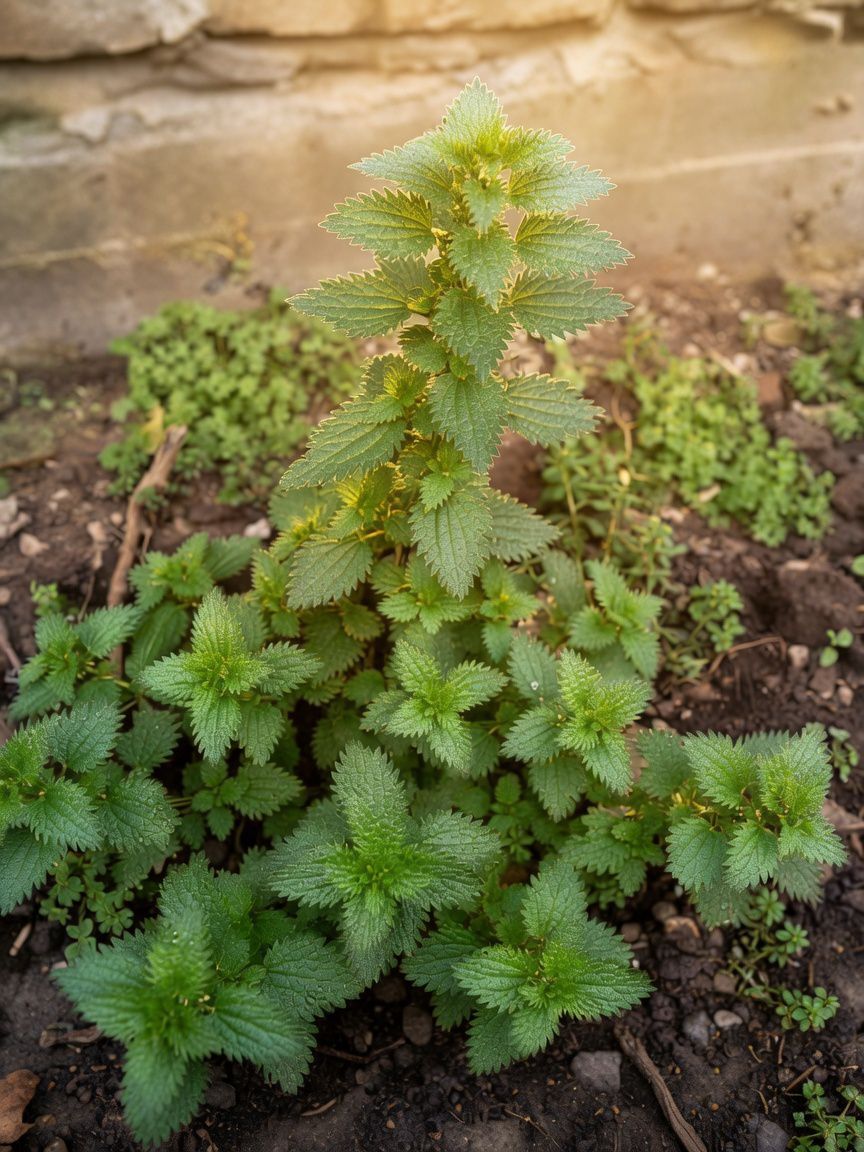
If you spot a patch of stinging nettle like the one in image.png and want to harvest it yourself, following strict safety protocols will protect your hands and preserve the environment:
1. Wear Proper Protective Gear
Never attempt to harvest wild nettles barehanded. Always wear thick leather or heavy-duty rubber gardening gloves, a long-sleeved shirt, and long pants.
2. Harvest Only the Top Growth
The best culinary portions of the plant are the tender top four to six leaves (often referred to as the “nettle tops”). Use sharp kitchen shears to snip these top segments off. The older, lower leaves further down the stem accumulate gritty calcium carbonate crystals, which can irritate the kidneys if consumed in massive quantities.
3. Check Your Environment
Because nettles absorb minerals and elements from the soil efficiently, never harvest plants growing near busy highways, industrial sites, or fields sprayed with chemical pesticides. Look for clean patches growing in rich, organic soil near forests or pristine creeks.
How to Prepare and Use Nettle in the Kitchen
To render the stinging hairs completely harmless, you must subject the raw leaves to heat or drying. Both processes break down the fragile silica needles and neutralize the acidic defensive chemicals completely.
[Harvest Nettle Tops with Gloves] ──> [Blanch in Boiling Water for 2 Mins] ──> [Shock in Ice Water & Drain]The Blanching Technique
The most popular way to prep fresh nettle is blanching. Bring a large pot of salted water to a rolling boil. Using tongs, carefully drop your fresh nettle leaves into the water and submerge them for 2 minutes.
Drain the leaves through a colander and immediately plunge them into a bowl filled with ice water to stop the cooking process and preserve their bright green color. Squeeze out the excess water thoroughly. The resulting greens taste remarkably similar to a rich, earthy spinach with a subtle hint of cucumber.
Popular Culinary Applications
- Classic Nettle Soup: Sauté the blanched, chopped nettle greens with potatoes, leeks, garlic, and vegetable broth. Puree the mixture until smooth and finish with a splash of heavy cream.
- Wild Foraged Pesto: Blend blanched nettle leaves in a food processor with toasted pine nuts (or walnuts), garlic, parmesan cheese, olive oil, and a splash of lemon juice.
- Herbal Nettle Tea: If you prefer a soothing drink, steep thoroughly dried nettle leaves in hot water for 10 minutes. The resulting herbal tea has a pleasant, grassy aroma and provides a rich dose of daily antioxidants.
Publisher Content Note: When discussing wild foraging on your website, always include a standard disclaimer advising readers to accurately identify plants using an official botanical field guide before ingesting them. This ensures compliance with search engine safety guidelines while building trust with your audience.