Introduction
There’s something incredibly comforting about a dish that feels like a warm hug from Grandma, and Slow Cooker Amish Cabbage Noodles fit that bill perfectly. This simple yet profoundly satisfying meal originates from the heart of Amish country, where wholesome, hearty, and unfussy food reigns supreme. It’s a testament to how humble ingredients can come together to create something truly extraordinary, a dish that nourishes both body and soul.
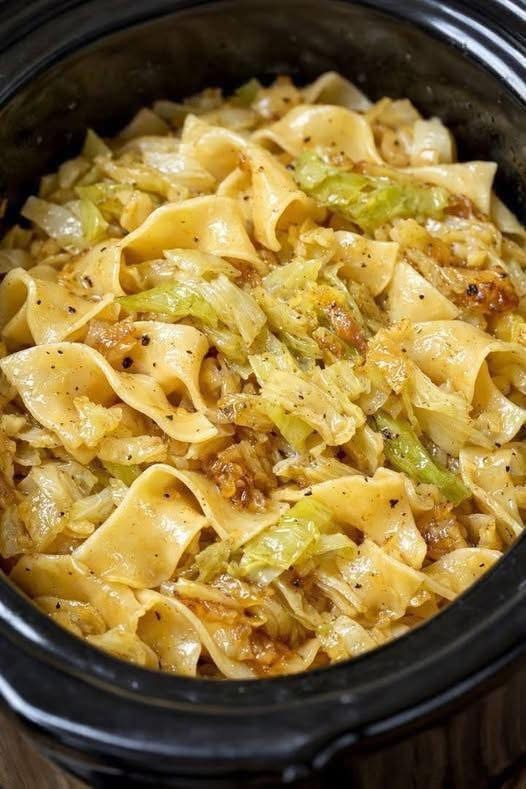
Amish Cabbage Noodles are a classic for a reason: they celebrate the sweet earthiness of tender cabbage, the savory depth of caramelized onions, and the satisfying chew of wide egg noodles, all brought together in a harmonious blend of flavors. While traditionally cooked on the stovetop, adapting this beloved recipe for the slow cooker elevates its convenience to an entirely new level. It allows the flavors to meld beautifully over hours, creating an even richer, more profound taste with minimal effort on your part.
This recipe transforms a beloved comfort food into an effortless weeknight wonder or a perfect dish for a cozy weekend meal. The slow cooker does all the heavy lifting, ensuring perfectly tender cabbage and deeply flavorful onions, all while you go about your day. Get ready to experience the magic of hands-off cooking and a dish that will quickly become a cherished family favorite, bringing a taste of Amish tradition right to your table.
Nutritional Information
Per serving (approximate values):
- Calories: 380
- Protein: 15g
- Carbohydrates: 55g
- Fat: 10g
- Fiber: 8g
- Sodium: 650mg
Ingredients
- 1 large head green cabbage (about 3-4 pounds), cored and thinly sliced
- 2 large yellow onions, thinly sliced
- 4 tablespoons unsalted butter, divided
- 1 teaspoon salt, plus more to taste
- 1/2 teaspoon black pepper, plus more to taste
- 4 cups vegetable broth (or chicken broth for non-vegetarian)
- 12 ounces wide egg noodles
- 2 tablespoons fresh parsley, chopped (for garnish, optional)
Instructions
- Melt 2 tablespoons of butter in a large skillet over medium heat. Add the sliced onions and cook, stirring occasionally, for 15-20 minutes, or until deeply golden brown and caramelized. This step is crucial for developing deep flavor, so don’t rush it.
- While the onions are caramelizing, prepare the cabbage. Remove any tough outer leaves, core the cabbage, and thinly slice it.
- Place the thinly sliced cabbage into the slow cooker insert.
- Evenly spread the caramelized onions over the cabbage in the slow cooker.
- Pour the vegetable broth over the cabbage and onions.
- Add the remaining 2 tablespoons of butter, cut into small pieces, on top of the vegetables.
- Sprinkle with 1 teaspoon of salt and 1/2 teaspoon of black pepper.
- Cover the slow cooker and cook on LOW for 6-8 hours or on HIGH for 3-4 hours, or until the cabbage is very tender.
- About 30-45 minutes before serving, stir the cabbage mixture to combine.
- Add the wide egg noodles directly into the slow cooker with the cooked cabbage. Ensure the noodles are submerged in the liquid. If needed, add a splash more broth or water to ensure the noodles are covered.
- Increase the slow cooker setting to HIGH (if not already there) and continue to cook for 20-30 minutes, or until the noodles are tender and cooked through, stirring once or twice to prevent sticking. The cooking time for noodles can vary, so check for doneness.
- Taste the dish and adjust seasonings (salt and pepper) as needed.
- Serve hot, garnished with fresh chopped parsley if desired.
Cooking Tips and Variations
For the best flavor, don’t skimp on caramelizing the onions. This step truly unlocks a depth of sweetness and savoriness that sets this dish apart. If you’re short on time, you can do this a day ahead and store them in the fridge. When preparing the cabbage, aim for thin, even slices so it cooks down uniformly and becomes wonderfully tender. A mandoline can be a great tool for this, but a sharp knife works just as well. When you add the noodles, make sure they are mostly submerged in the liquid to ensure even cooking. Stirring them occasionally during their cooking time in the slow cooker will also help prevent them from clumping together.
To make this dish heartier, consider adding a protein. Browned ground beef, smoked sausage, or crispy bacon bits can be stirred in during the last hour of cooking or served on top. For a vegetarian option with more protein, you could add cooked lentils or cannellini beans. If you like a little heat, a pinch of red pepper flakes can be added with the salt and pepper. A splash of apple cider vinegar stirred in at the end can brighten the flavors and add a subtle tang. For a richer, creamier texture, stir in a tablespoon or two of sour cream or cream cheese just before serving. You can also experiment with different types of noodles, though wide egg noodles are traditional for their comforting texture.
Storage and Reheating
Leftover Slow Cooker Amish Cabbage Noodles store beautifully, often tasting even better the next day as the flavors have had more time to meld. To store, allow the dish to cool completely before transferring it to an airtight container. It can be refrigerated for up to 3-4 days. For longer storage, you can freeze individual portions in freezer-safe containers for up to 2-3 months. If freezing, the noodles might become slightly softer upon reheating, but the flavor will still be excellent.
When reheating from the refrigerator, the easiest method is to use the microwave. Place a single serving in a microwave-safe dish, cover loosely, and heat on medium power for 2-3 minutes, stirring halfway through, until heated through. If reheating a larger portion, or if you prefer the stovetop, transfer the leftovers to a pot or skillet over medium-low heat. Add a splash of vegetable broth or water to prevent sticking and help rehydrate the noodles, stirring occasionally until warmed through. If reheating from frozen, it’s best to thaw it overnight in the refrigerator first, then reheat using one of the methods above. Alternatively, you can reheat directly from frozen in the microwave, adding a bit more liquid and increasing the heating time.
Frequently Asked Questions
Can I use different types of cabbage?
While green cabbage is traditional and highly recommended for its sweet flavor and tender texture when cooked, you could experiment with other varieties. Napa cabbage would cook down even faster and have a slightly different, milder flavor. Red cabbage could also be used, but it might slightly tint the noodles and broth, and its flavor is a bit more robust.
What if I don’t have a slow cooker? Can I make this on the stovetop?
Yes, you can definitely adapt this recipe for the stovetop! After caramelizing the onions, add the sliced cabbage and cook until it starts to soften. Then, add the broth, salt, and pepper, cover, and simmer on low heat for about 45-60 minutes, or until the cabbage is very tender. Add the noodles during the last 10-15 minutes of cooking, ensuring there’s enough liquid for them to cook in. The slow cooker just makes it more hands-off and allows flavors to deepen over a longer period.
Can I add meat directly to the slow cooker with the cabbage?
For best results, if adding raw meat like ground beef or sausage, it’s recommended to brown it in a skillet first to render fat and create a richer flavor profile. Drain any excess fat, then add the browned meat to the slow cooker along with the cabbage and onions. If using pre-cooked meat like ham or smoked sausage, you can add it directly to the slow cooker during the last hour of cooking to allow it to warm through and meld with the flavors.
My noodles are mushy. What went wrong?
Mushy noodles are usually a result of overcooking. It’s crucial to add the noodles toward the end of the slow cooker’s cooking cycle, typically in the last 20-30 minutes, and to monitor them closely. Different brands and types of noodles can have varying cooking times. Ensure they are submerged in liquid, and stir occasionally, but don’t leave them in for too long after they’ve reached your desired tenderness.