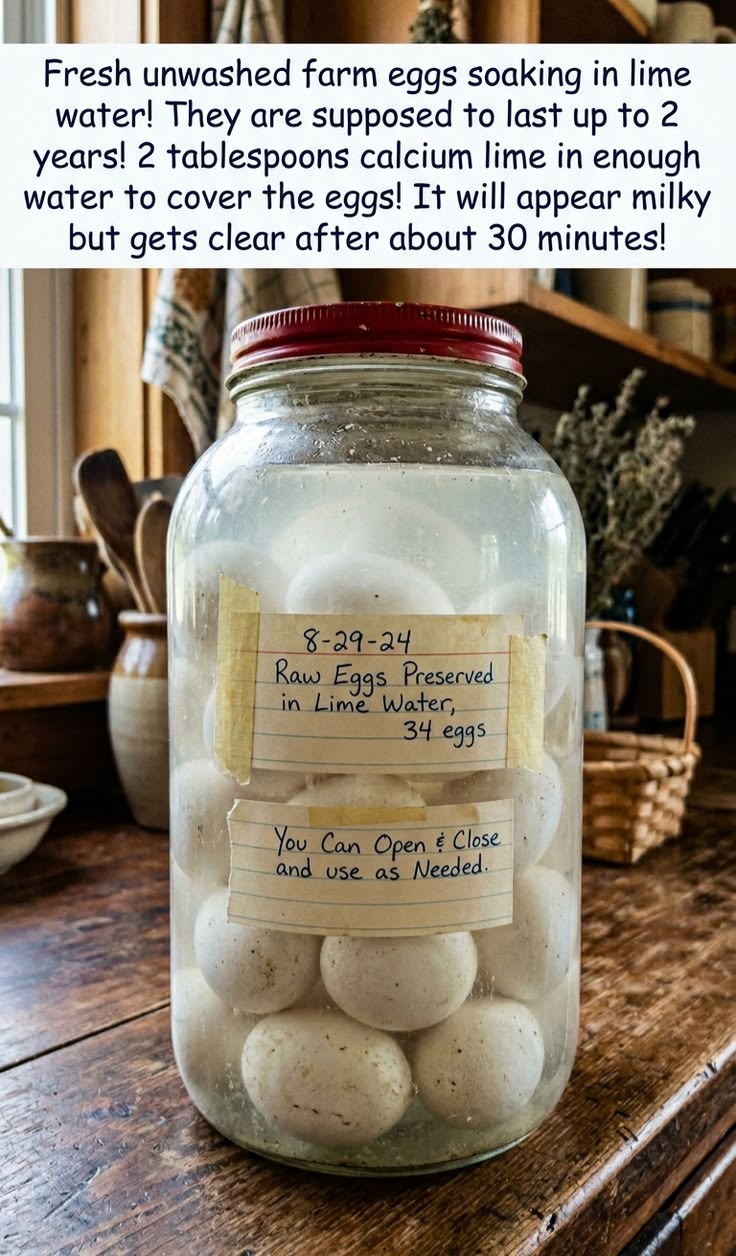
🥚 How to Water-Glass Eggs: Preserve Fresh Eggs for Up to 2 Years
Water-glassing eggs is a traditional, time-tested preservation method that allows you to store fresh eggs for long periods without refrigeration. This technique was widely used before modern fridges existed, and it’s still popular today among homesteaders and people who want to reduce food waste. By using a simple lime solution, you can safely keep eggs fresh and usable for up to two years.
🌿 What Is Water Glassing?
Water glassing is the process of preserving eggs in a solution made from water and pickling lime (calcium hydroxide). This solution creates a protective environment around the eggshell, sealing it and preventing bacteria and air from entering. As a result, the eggs stay fresh much longer than they would under normal storage conditions.
🟢 Ingredients & Supplies
To get started, you’ll need just a few simple items:
- Fresh, unwashed eggs (preferably farm-fresh)
- Pickling lime (food-grade calcium hydroxide)
- Clean, filtered or distilled water
- A large glass jar, ceramic crock, or food-grade plastic container
- A lid to cover the container
⚠️ Important Preparation Tips
Before you begin, there are a few critical rules to follow:
- Do not wash the eggs: Fresh eggs have a natural coating called the “bloom” that protects them from bacteria. Washing removes this barrier.
- Use only clean, intact eggs: Cracked or dirty eggs should not be used, as they can spoil the entire batch.
- Use fresh eggs: The fresher the eggs, the better they will preserve over time.
- Avoid store-bought eggs: These are usually washed and won’t work for this method.
🧂 Step-by-Step Instructions
1. Prepare the Lime Solution
In a bowl or directly in your container, mix 1 quart (about 1 liter) of water with 1 tablespoon of pickling lime. Stir thoroughly. The mixture may appear cloudy, which is completely normal.
2. Add the Eggs
Carefully place your eggs into the container. Arrange them pointy-side down if possible, as this helps maintain the yolk’s position and quality.
3. Pour the Solution
Slowly pour the lime water over the eggs until they are completely submerged. Make sure there is at least an inch (2–3 cm) of liquid covering the top layer of eggs.
4. Seal the Container
Cover the container with a lid to keep out dust and contaminants. It doesn’t need to be airtight, but it should be well protected.
5. Store Properly
Place the container in a cool, dark location such as a pantry, basement, or cellar. Avoid areas with temperature fluctuations or direct sunlight.
⏳ How Long Do Water-Glassed Eggs Last?
When done correctly, eggs preserved using this method can last anywhere from 12 months to 2 years. Many people report that even after a year, the eggs still look and cook like fresh ones.
🍳 How to Use Preserved Eggs
When you’re ready to use your eggs:
- Remove the desired number from the container
- Rinse them thoroughly under clean water
- Crack each egg into a separate bowl before using
- Use them for cooking, baking, or frying
While they can be used like fresh eggs, they are especially great for baked goods and recipes where eggs are mixed in.
🔍 How to Check If an Egg Is Still Good
Even with preservation, it’s always important to check:
- Smell test: A bad egg will have a strong sulfur or rotten odor
- Float test: Place the egg in water—if it floats, discard it
- Visual check: If the egg looks unusual after cracking, don’t use it
✅ Benefits of Water Glassing Eggs
- Long-term storage without refrigeration
- Reduces food waste
- Cost-effective and simple
- Maintains egg quality for cooking
- Ideal for homesteading and self-sufficiency
⚠️ Safety Notes
- Always use food-grade pickling lime
- Keep eggs submerged at all times
- Use clean utensils when handling eggs
- Discard any eggs that seem questionable
🌟 Final Thoughts
Water-glassing eggs is a simple yet powerful way to preserve one of the most versatile foods in your kitchen. With just a few ingredients and a little preparation, you can ensure a steady supply of eggs for months—or even years. Whether you’re preparing for the future, managing a surplus from your chickens, or just exploring traditional methods, this technique is both practical and rewarding.
Give it a try, and you might never worry about running out of eggs again! 🥚